

Native Plant Sale

In Cooperation with Little Falls Watershed Alliance
Support Local Habitats
Sunday, May 3rd at 12:00 in the upper Parking lot of the Church
Support the growing native plant movement in the Little Falls Watershed!
Native plants promote a living landscape by attracting butterflies, birds, and pollinators to colorful perennial gardens. The sale will feature starter plugs for New England Asters, Black-Eyed Susans, Purple Coneflowers, and other species for easy planting.
Restoring native vegetation to our suburban gardens promotes a healthy wildlife habitat and ecosystem. Whether you’re a veteran gardener or a rookie, you can choose your own mix to create a beautiful outdoor space.
Planting Details: The plants are native landscape plugs. They are intended to be planted directly in the ground or a container to quickly establish them.
-
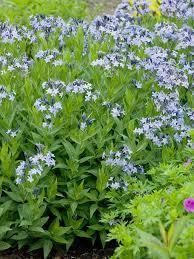 Amsonia Blue Star – “Blue Ice
“Blue Ice” is an amsonia blue star cultivar. Amsonia is a genus of about 20 species native to light woodlands or grasslands of the Northeast United States. The “Blue Ice” cultivar is an erect, clump-forming plant that features terminal, pyramidal clusters of star-like, dark lavender-blue flowers (3/4” across) in the Spring, atop erect, leafy stems growing to only 15-18” tall. The blooms are attractive to butterflies and other insect pollinators. The Fall foliage is a beautiful golden color. Amsonia is easily grown in average, well-drained soil in full sun to part shade. Best Fall foliage color usually occurs in full sun, but flowers generally last longer if given some afternoon shade in hot sun areas. This compact cultivar does not need to be cut back after flowering, and generally requires no staking or support. Amsonia is often used as a tall grass-like ground cover.
-
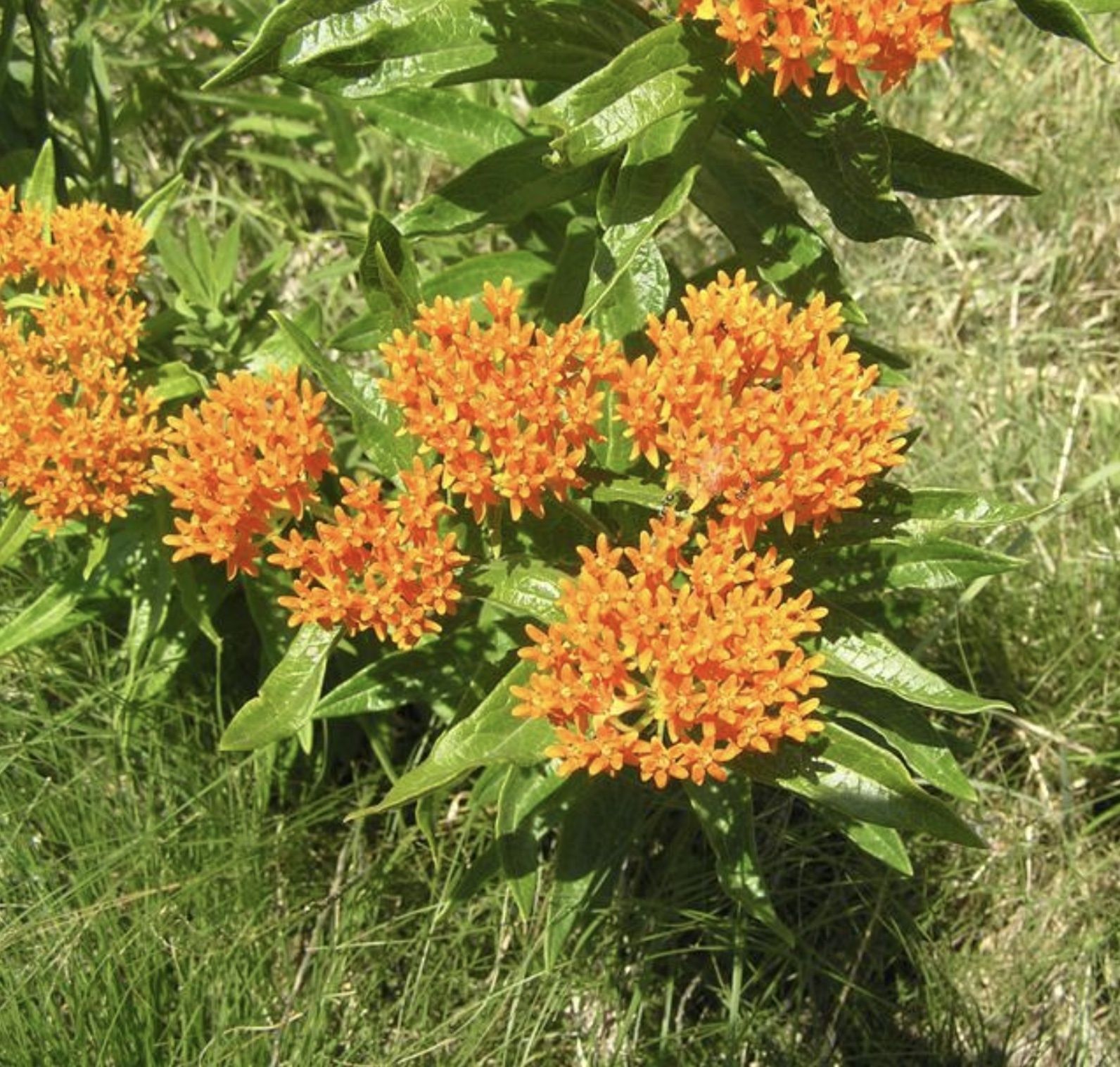 Butterfly Milkweed (Asclepias tuberosa)
Butterfly Milkweed, or Butterfly Weed, is a showy and hardy milkweed with orange flowers that bloom in mid to late Summer. Asclepias tuberosa is a very popular native plant, well-known for attracting bumble bees and Monarch and other varieties of butterflies. It will grow to about 1-2 feet in height and spread up to 2 feet (spacing 12-18 inches recommended). It thrives in sunny locations with dry, rocky soil, and is deer resistant. This variety of millkweed does not exude a milky sap when the stem is broken.
-
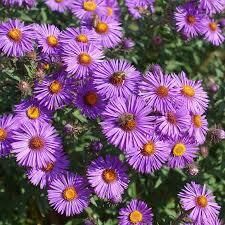 New England Aster (Aster novae-angliae)
New England Aster is a tall, showy perennial flower that blooms August – October in colors ranging from lavender to blue. The name “aster” is a reference to the star-like shape of the flower. The species is native throughout most of the conterminous United States, except a few southern states and a few western states. Asters can grow up to 6 feet, but typically range from 3 to 4 feet high. Asters perform best in full sun, with well-drained soil and room to grow. No staking is usually required. Plants should be divided every couple of years in the Spring to promote vigor and growth. Asters will attract Monarch and other butterflies in the Fall.
-
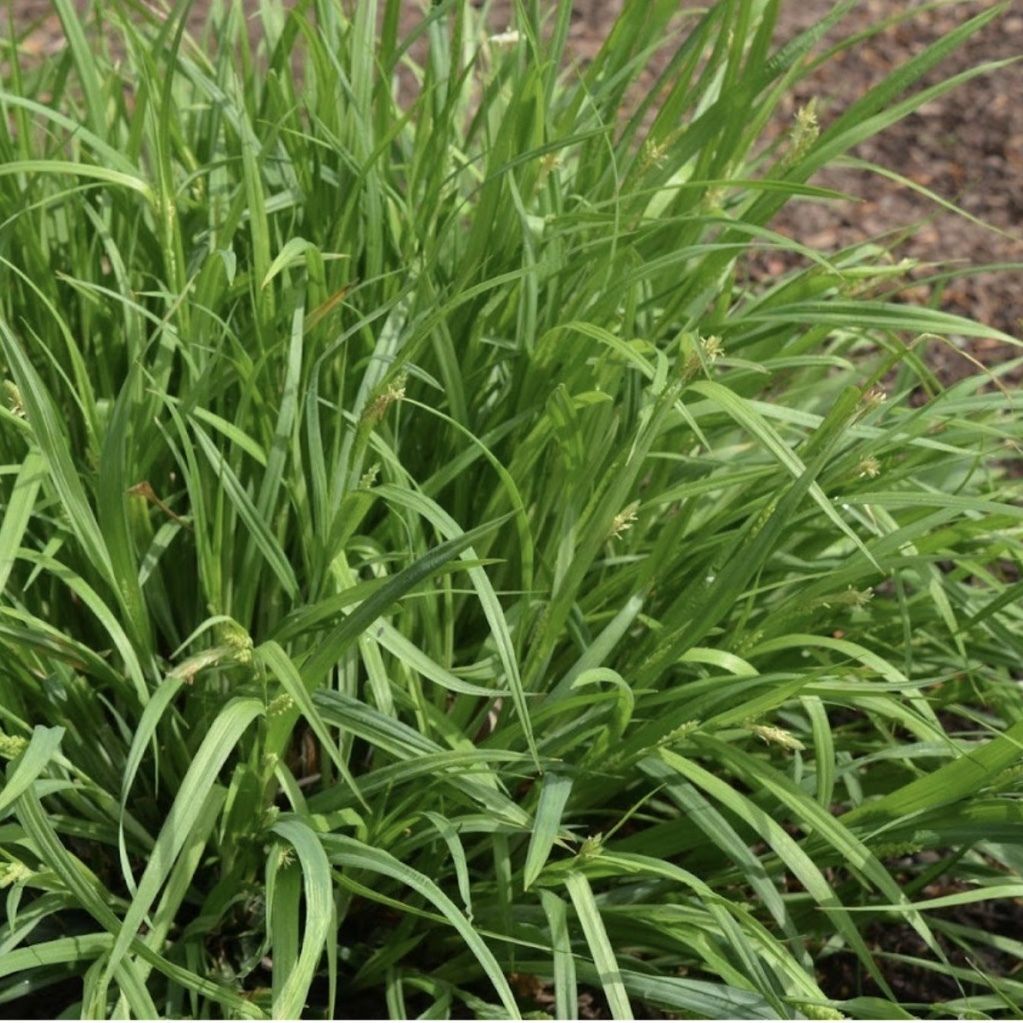 Carex Flaccosperma (Thin Fruit Sedge)
Carex flaccosperma is a grass-like sedge and is a ground cover alternative to non-native liriope. This carex occurs in moist shaded wetlands in the south central and southeastern United States as well as southern portions of the mid-Atlantic region. Carex flaccosperma produces attractive flowers in late April and early May, although these soon flop after blooming. Eventually the flattened flowering stems are covered by attractive blue-green foliage that looks exceptional in shade but tends to burn in full sun. It is semi-evergreen and provides cover in winter.
-
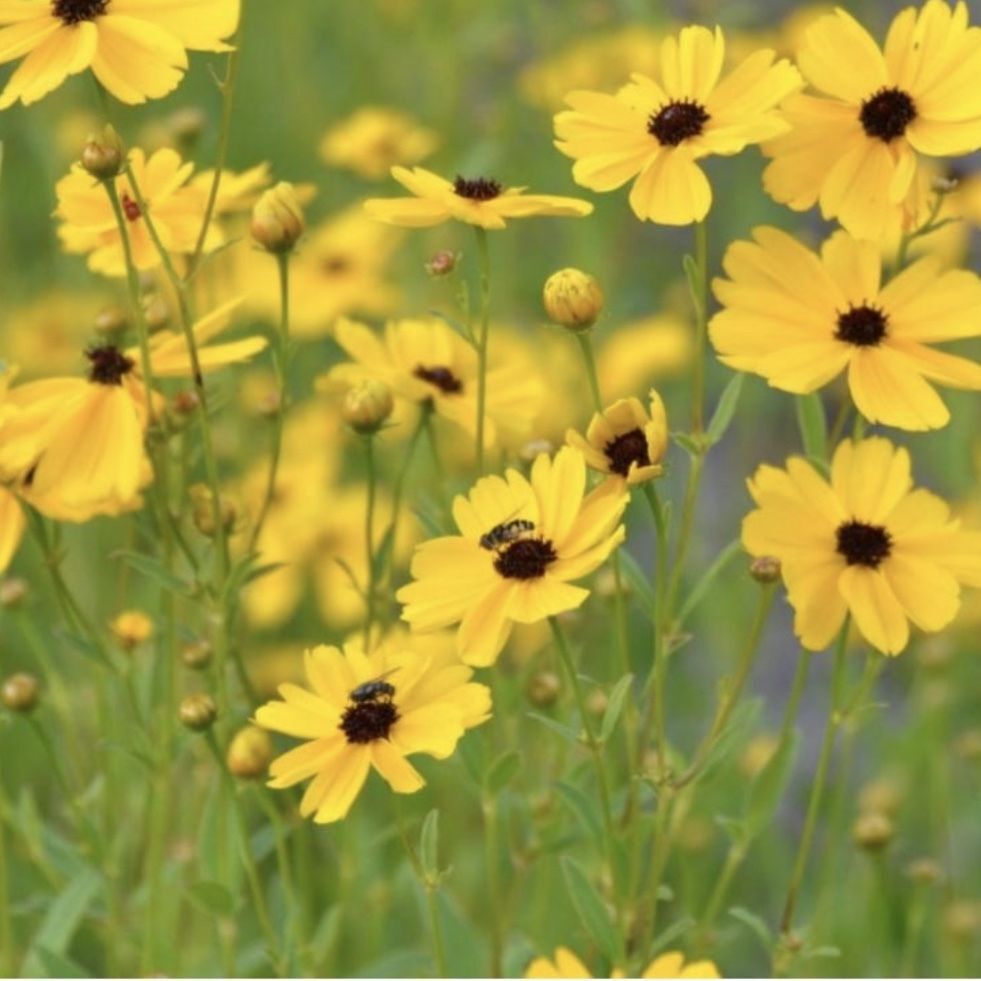 Coreopsis Palustris – “Summer Sunshine”
Coreopsis palustris “Summer Sunshine” is a coreopsis cultivar. Coreopsis is often referred to as “tickseed.” It does best in a spot with full sun (6-8+ hours) and well-draining soil. It tolerates partial sun, but will produce fewer flowers. It thrives in lean conditions, tolerates heat and drought, but dislikes wet feet (especially clay). Coreopsis is good for borders or containers, offering vibrant blooms and attracting pollinators. “Summer Sunshine” is one of the few coreopsis cultivars that blooms in the Fall – its golden flowers with dark cones last about six weeks during September and October. “Summer Sunshine” not only has an amazing Fall floral display, but the plant has a dense and sturdy habit as well as disease resistant foliage. Because it is such a late bloomer, “Summer Sunshine” serves as an important late-season food source for pollinators.
-
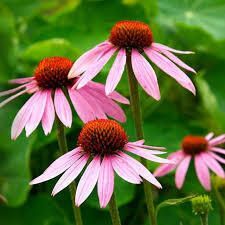 Purple Cone Flower (Echinecea purperea)
Echinecea purperea is a well-known pollinator – a poster child for native plants and very common in local gardens. The beautiful purple coneflowers bloom in Summer with purple-pink petals and orange cones. The flowers can grow to 2 -3 feet in height and spread 18 – 24 inches (spacing of 12 inches recommended). Echinacea tolerate dry conditions, a range of soil conditions, and part shade to full sun (although flowers are best in full sun). Flowers can be deadheaded to encourage longer bloom time. The seedheads are a good source of food for birds and attract goldfinches. The plants are deer resistant.
-
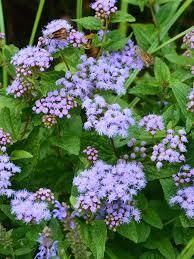 Blue Mistflower or Hardy Argentum (Eupatorum coelestinum)
Blue Mistflower features fuzzy blue flowers atop green foliage and attractive red stems. It blooms in September and October, attracts bees and butterflies, and makes great cut flowers. It is naturally found in old fields and meadows and can adapt to a range of soil and light conditions, including clay soils and shade. Hardy Argentum is best suited for areas where it can generously spread. Height can reach 2 – 3 feet with a spread up to 2 feet (spacing of 12 – 18 inches recommended).
-
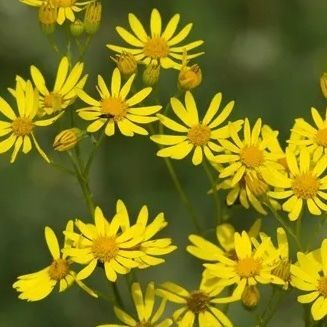 Golden Groundsel/Ragwort (Packera aurea)
Packera aurea (Golden Groundsel or Golden Ragwort) is a native alternative to common pachysandra. It is a MoCo Rainscapes recommendation as an evergreen groundcover for shady gardens. Packera will spread vigorously and bloom with golden-yellow, daisy-like flowers in April. The flowers appear on 2 – 3 foot stalks. It supports pollinators and is deer resistant. Recommended for average to moist soil; one square foot per plant.
-
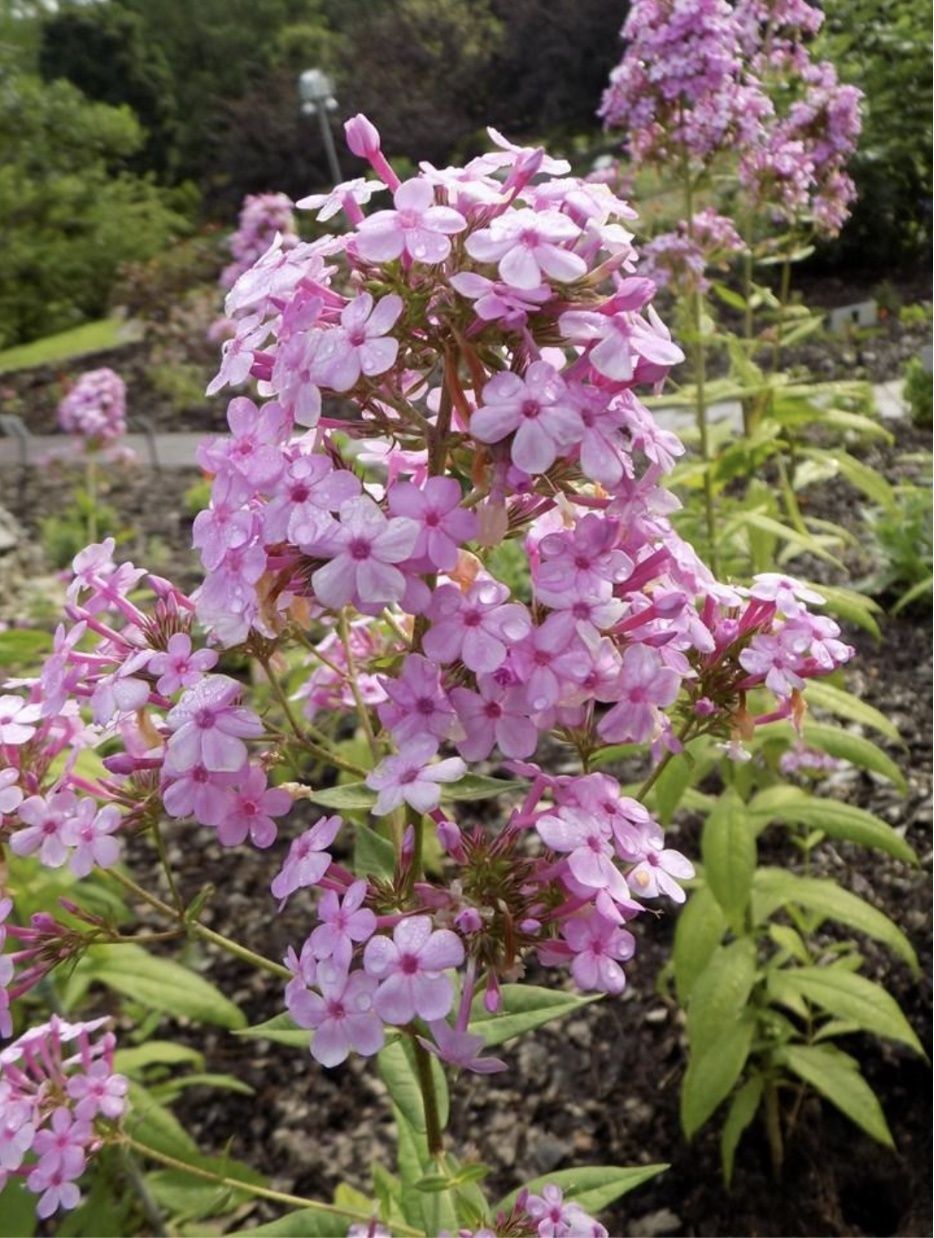 Phlox (Phlox paniculata) – “Jeana”
Garden Phlox “Jeana” displays varying shades of scented, lavender-pink flowers from mid-Summer through early Autumn. Jeana can grow with stems up to 5 feet and spread 2 – 3 feet (spacing of 18 inches recommended). Green foliage and flower clusters create a tiered effect and attract pollinators. Phlox thrives in moist areas in wooded areas and along streams, with average to moist soil, and does best in sun or light shade. Plants in the shade may have smaller flowers and less robust stems. This plant is attractive to deer, so is best planted in a deer-protected area or an area with other vegetation that gives the deer more selection. “Jeana” is mildew resistant. Deadhead to prolong blooming season.
-
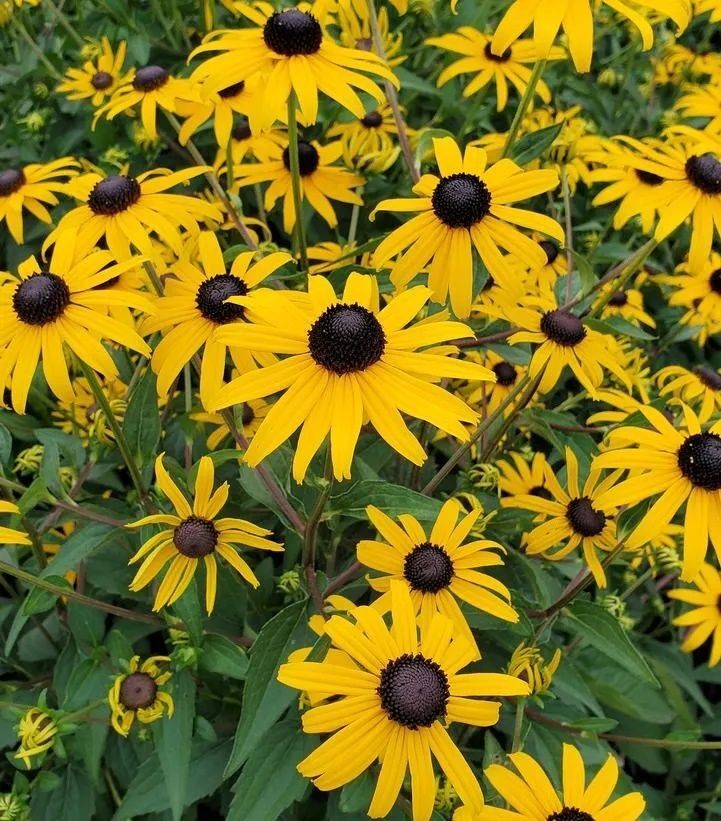 Black-Eyed Susan (Rudbeckia fulgida) – var. fulgida
Black-eyed Susan, or Orange Coneflower, is a native clumping perennial and very common in local DMV gardens. It has deep green foliage and yellow-orange flowers with dark buttons. Black-eyed Susan does well in mass plantings and provides nectar in the Summer for butterflies and seeds in the Winter for birds. The variety fulgida is a slightly shorter and later blooming variety than many Black-eyed Susans. It grows best in full sun and well-drained soil. Once established, it can withstand dry conditions. It is also deer resistant. Fulgida grows 18 to 24 inches in height and will spread up to 2 feet (spacing of 18 inches recommended).
-
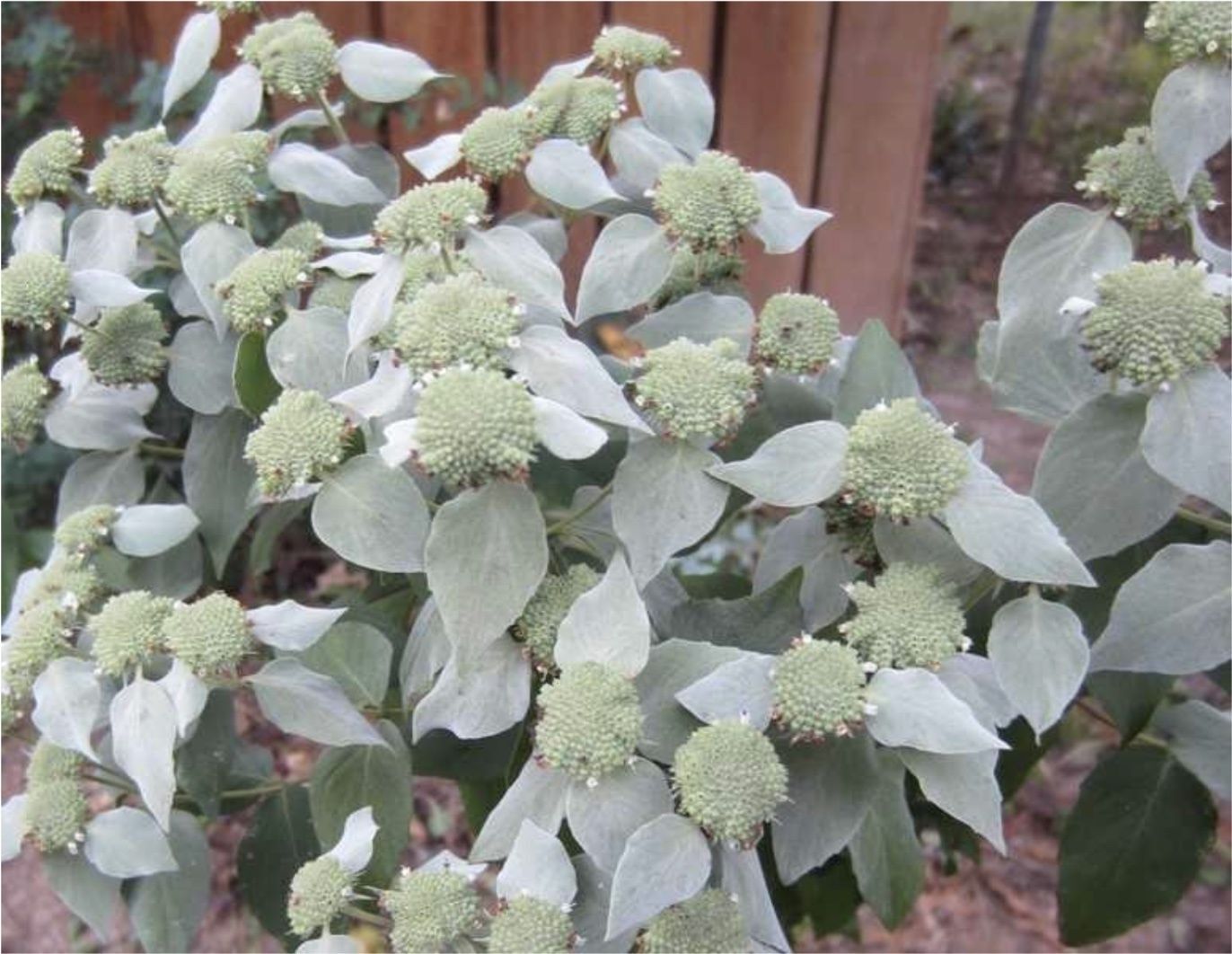 Clustered Mountain Mint (Pycnanthemum muticum)
Appalachian Mountain Mint is a spreading perennial and a favorite of butterfly gardeners. It is a member of the mint family and a good nectar source for butterflies and bees. The aromatic oils in the foliage also make it deer and rabbit resistant. Pycnanthemum muticum is an aromatic, Summer-blooming, herbaceous perennial that produces silvery white, globular flowers on sturdy, upright stems. It is native to Eastern North America (Maine to Michigan to Illinois and Missouri south to Florida and Texas) where it typically grows in grassy open places, meadows, and fields. This mountain mint features dense, dark green leaves which have a strong mint-like (spearmint) aroma when crushed. Blooming over a long period, flowers are prominently displayed above clean green foliage from Summer into Fall. It does well in a variety of sites from full sun to shade and dry to moist conditions. It is often incorporated into rain gardens or near vegetable gardens to entice pollinators. It can grow to 2 – 3 feet in height and spread 2 – 3 feet (spacing of 12 inches recommended).
-
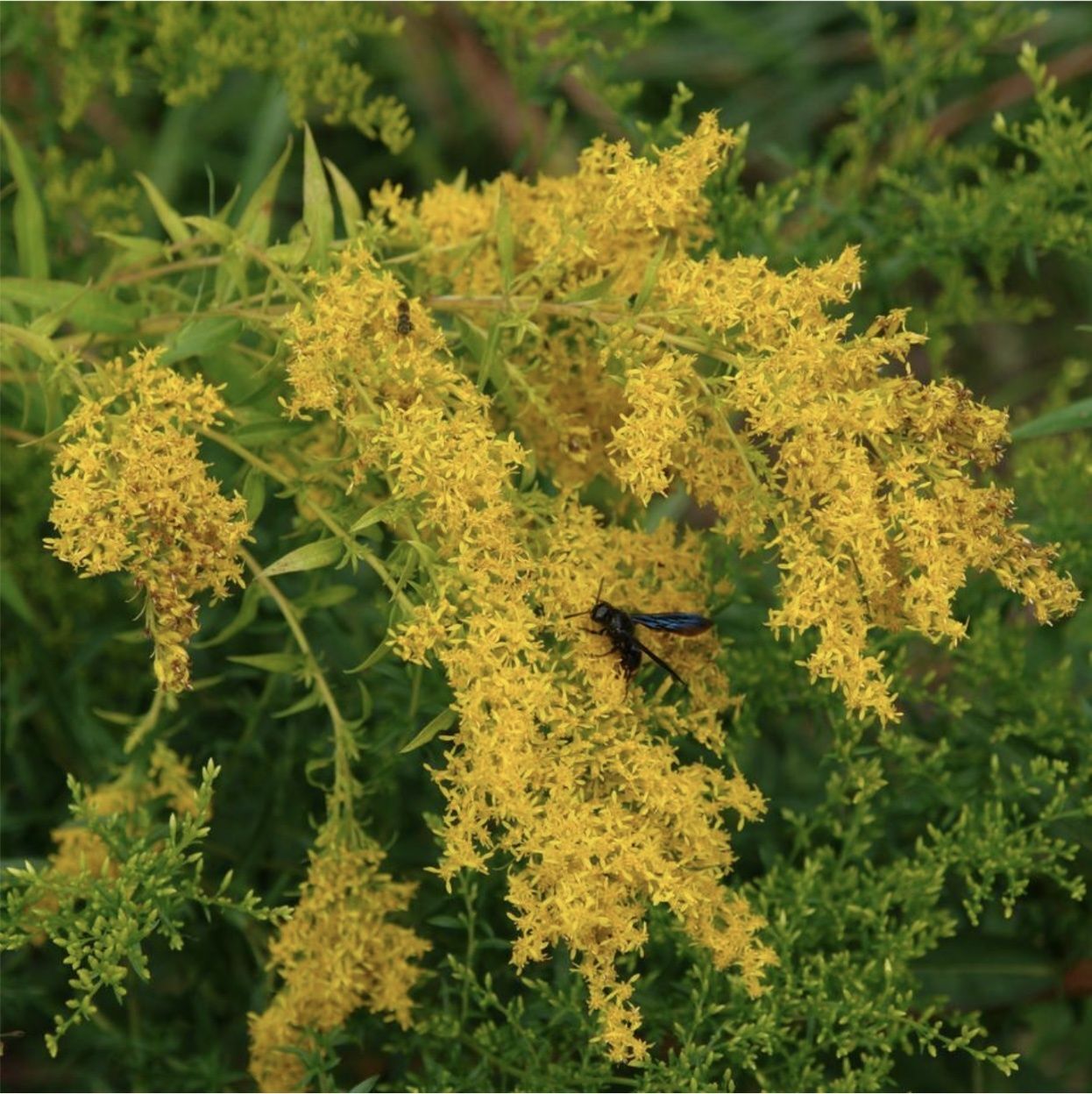 Solidago Odora (“Sweet Goldenrod”)
Solidago odora is commonly called “Sweet Goldenrod.” It is easily identified by its anise-scented leaves and its plume-like clusters of yellow, daisy-like flowers that bloom in August-September. It is native to dry, sandy, open woods in the Eastern U.S. It tolerates light shade but does best in full sun. Plants typically rise to 2-4’ tall on smooth or downy stems clad with dark green leaves (up to 4” long). When bruised, its leaves smell like anise. Leaves may be used in teas. The foliage of this plant has also been used in the past in herbal medicines for a variety of treatments. Goldenrods are attractive to bees and butterflies. Goldenrods have been accused of causing hay fever, which actually is an allergic reaction to wind-borne pollen from other plants such as ragweed. This species is also commonly called anise-scented goldenrod or fragrant goldenrod.
Sale on May 3rd at 12 pm in the upper parking lot of St. Dunstan's.
Pricing is as follows:
$4 per plant
We will see you on May 3rd in the upper parking lot of St. Dunstan's Church at noon!
